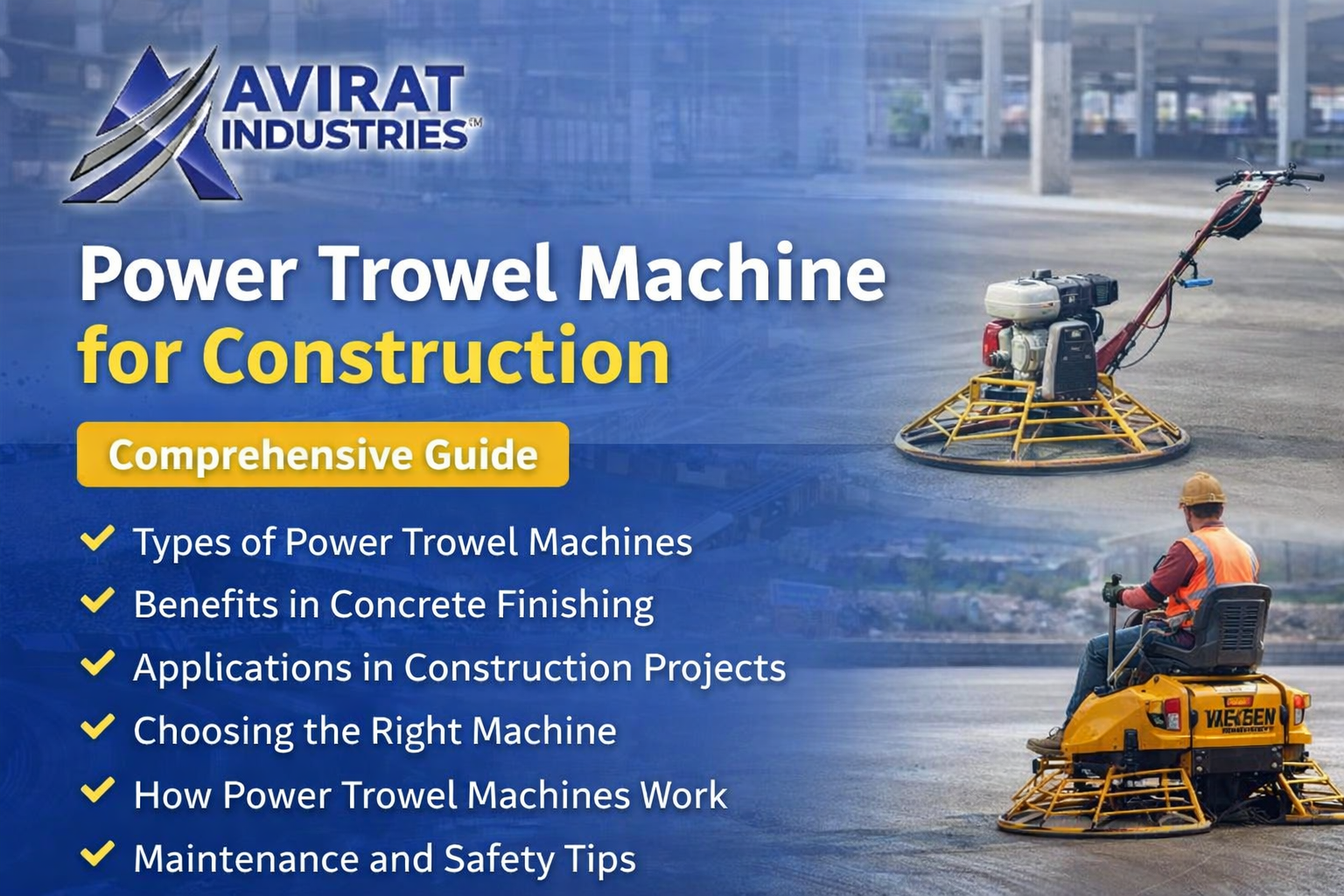
Power Trowel Machine for Construction
Power Trowel Machine for Construction
Concrete finishing plays a crucial role in determining the strength, durability, and appearance of any concrete surface. A power trowel machine for construction is widely used to achieve a smooth and level concrete finish after the initial placement and leveling of concrete. In modern construction projects, maintaining consistent surface quality is essential for structural integrity as well as the long-term performance of floors and slabs.
The power trowel machine is specifically designed to deliver efficient finishing of freshly poured concrete surfaces. By rotating multiple blades across the surface, the machine compresses and smooths the concrete, improving its density and creating a uniform finish. This process not only enhances the visual appearance of the concrete but also improves surface durability and resistance to wear.
Construction professionals rely on power trowel machines for flooring projects where a polished and level surface is required. Industrial floors, warehouses, commercial complexes, parking structures, and large infrastructure developments frequently utilize this equipment during the final stage of concrete finishing.
Understanding the Role of Power Trowel Machines in Concrete Finishing
Concrete finishing is a multi-step process that begins after the concrete mixture has been placed, spread, and leveled. At this stage, the concrete remains workable while gradually gaining strength. A power trowel machine is used to smooth the surface, remove minor imperfections, and compact the concrete for improved performance.
The rotating blades glide across the surface while applying controlled pressure. This action helps eliminate air pockets, reduce surface porosity, and produce a dense, even finish. As a result, the finished concrete surface becomes stronger and more resistant to cracking, dusting, and surface damage.
Power trowel machines are commonly used to finish large concrete slabs where manual methods may be slower and less consistent. The machine significantly increases productivity while delivering professional-quality finishing results.
Types of Power Trowel Machines Used in Construction
Different construction environments require different types of power trowel machines depending on the scale of the project and operational requirements. The two primary categories are walk-behind machines and ride-on machines.
Walk-behind power trowel machines are commonly used for medium-sized construction areas. These machines are operated by manually guiding them across the concrete surface. They offer excellent control and are suitable for floors, pavements, and structural slabs where precise finishing is required.
Ride-on power trowel machines are designed for large construction sites where extensive floor areas must be finished efficiently. These machines allow the operator to sit on the equipment and control multiple blades simultaneously. They are widely used in large industrial flooring projects because they increase productivity while reducing operator fatigue.
Some advanced machines also include adjustable blade pitch control, improved stability systems, and higher power output to maintain consistent finishing performance across different concrete surfaces.
Important Factors to Consider When Choosing a Power Trowel Machine
Selecting the appropriate power trowel machine depends on the type of construction project and operational requirements. Contractors and project engineers typically evaluate several factors before choosing the equipment.
Important considerations include machine size, engine power, blade diameter, operating control systems, and maintenance requirements. Larger construction projects may require ride-on machines to improve productivity, while smaller sites may benefit from walk-behind machines that offer better maneuverability.
Durability and build quality are also important factors, as construction environments require machines capable of handling continuous operation and demanding workloads. Machines with stable frames, reliable engines, and efficient blade systems tend to perform more consistently on construction sites.
How a Power Trowel Machine for Construction Works
The operation of a power trowel machine is based on a simple but highly effective mechanical principle. The machine is powered by an engine or motor that rotates multiple finishing blades positioned beneath the machine frame. As the machine moves across the concrete surface, these blades apply pressure and rotate at controlled speeds.
The finishing process typically follows several stages:
During the floating stage, the blades help level the concrete while distributing the material evenly. In the finishing stages, blade angles are gradually adjusted to apply more pressure, compressing the concrete surface and producing a refined finish.
This controlled finishing process helps ensure that the final concrete surface remains structurally sound and visually uniform.
Applications of Power Trowel Machines in Construction Projects
Power trowel machines are widely used in various construction projects where concrete flooring or slab finishing is required. Their ability to create smooth and durable surfaces makes them essential equipment in modern construction environments.
Common applications include:
These applications require a uniform surface finish capable of supporting heavy loads, vehicle movement, and long-term structural stability. Power trowel machines help achieve the consistent finishing quality required for such demanding environments.
Benefits of Using Power Trowel Machines in Concrete Construction
Using a power trowel machine offers several advantages compared with manual finishing techniques. Construction companies rely on these machines because they improve efficiency while maintaining consistent finishing quality.
Major benefits include:
These advantages make power trowel machines an essential tool in concrete flooring and structural construction projects.
Maintenance and Safe Operation of Power Trowel Machines
Proper maintenance plays a significant role in ensuring the long-term performance and safety of power trowel machines. Routine inspection and servicing help prevent unexpected equipment issues during construction operations.
Operators typically inspect engine condition, blade wear, fuel systems, and other mechanical components before starting the machine. Cleaning the equipment after use and replacing worn blades helps maintain consistent finishing performance.
Safe operation is equally important. Operators must follow recommended safety procedures, maintain full control of the machine, and ensure surrounding workers remain at a safe distance during operation. Proper training and careful handling contribute to efficient and safe finishing work.
The Importance of Power Trowel Machines in Modern Construction
As construction projects continue to grow in scale and complexity, equipment that improves productivity and finishing quality has become increasingly important. The power trowel machine for construction remains one of the most widely used tools for achieving professional concrete surface finishing.
By combining mechanical efficiency with precise finishing control, these machines help create durable and visually consistent concrete floors and slabs. Their ability to improve surface density, reduce manual labor, and increase finishing speed makes them an important part of modern construction workflows.
Whether used in industrial flooring, commercial structures, or infrastructure developments, power trowel machines play a key role in producing high-quality concrete surfaces that meet the technical demands of contemporary construction.
FAQs
Conclusion
A power trowel machine for construction plays a vital role in achieving smooth, dense, and durable concrete surfaces in modern building projects. By mechanically compressing and finishing freshly poured concrete, the machine helps improve surface strength, uniformity, and long-term performance of floors and slabs.
From industrial warehouses and commercial buildings to infrastructure and large-scale construction sites, power trowel machines provide consistent finishing results that are difficult to achieve with manual methods alone. Their ability to increase productivity, enhance surface durability, and deliver professional finishing quality makes them an essential tool in concrete construction operations.
With proper operation, equipment selection, and routine maintenance, power trowel machines continue to support efficient and reliable concrete finishing across a wide range of construction environments.
Contact
Godown No 1, LS-433, Behind Khodal Hotel, Sanathal Bavla Highway, Ahmedabad 382210, Gujarat, (INDIA)