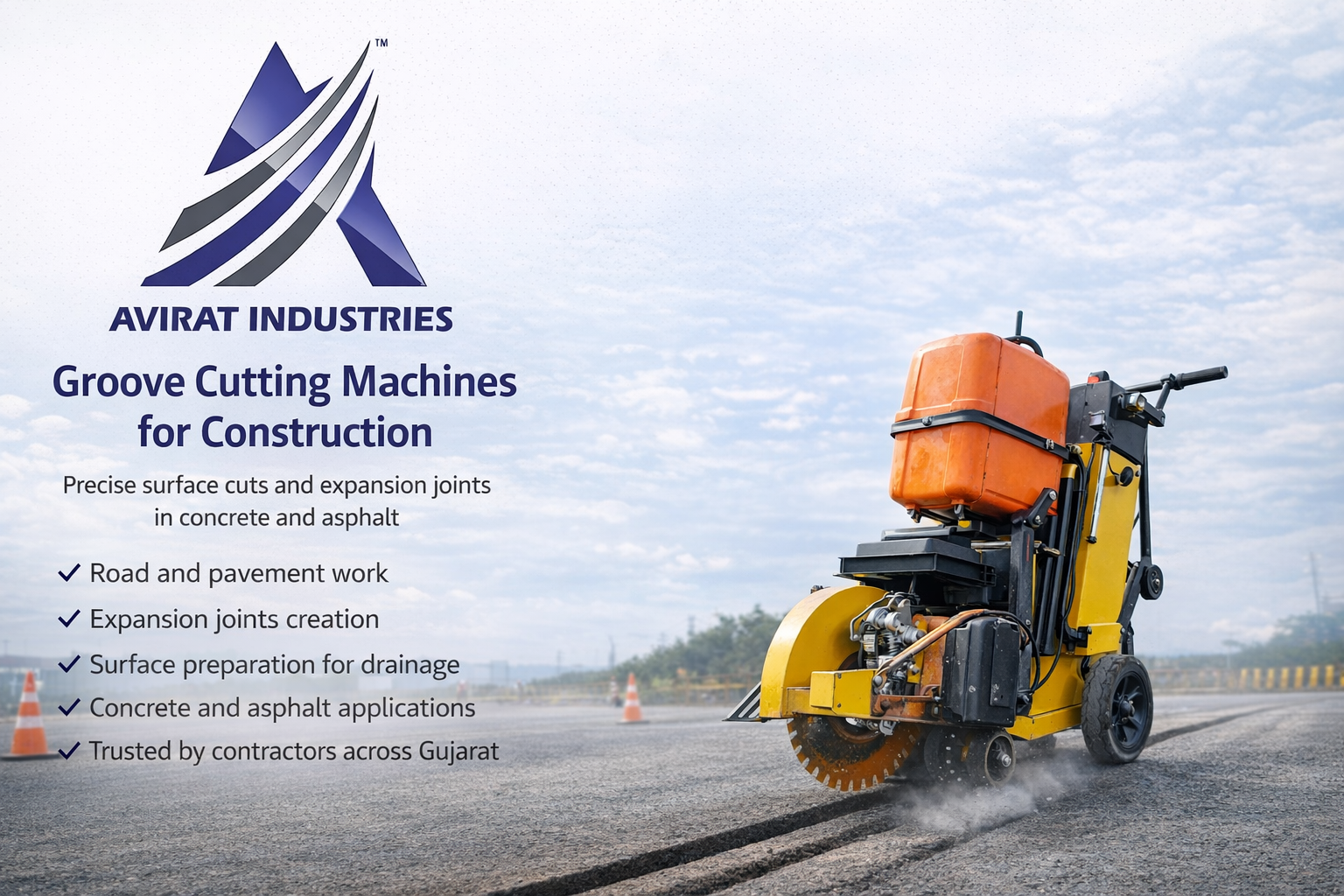
A groove cutting machine for construction is specifically designed to create accurate grooves, expansion joints, and surface channels in concrete and asphalt surfaces. These machines are widely used in infrastructure, roadwork, industrial flooring, and civil engineering projects where controlled and consistent cutting is required.
The importance of groove cutting equipment has increased as construction standards continue to demand improved surface finishing, crack control, and structural alignment. Contractors and engineers rely on these machines to achieve uniform cuts that support drainage, expansion, and reinforcement requirements.
Understanding the Role of Groove Cutting Equipment in Construction
A groove cutting machine for construction is a specialized tool that uses rotating blades to cut precise grooves into hard surfaces. These grooves play a key role in managing expansion joints, enhancing surface grip, and preparing concrete for further construction processes.
The machine operates using high-speed blades capable of cutting through dense materials such as reinforced concrete, asphalt, and industrial flooring. The cutting depth and width can be adjusted according to project requirements, making it suitable for a wide range of applications.
In demanding construction environments, where accuracy and consistency are critical, groove cutting machines help maintain structural integrity while reducing manual effort and time.
Working Principle of Groove Cutting Machines
The working mechanism of a groove cutting machine for construction is based on a motor-driven rotating blade system. The blade, typically made of diamond or high-strength alloy, cuts through hard surfaces with controlled pressure and speed.
The operator guides the machine along a marked cutting line while maintaining steady movement and alignment. Advanced models are equipped with depth control systems, vibration reduction features, and adjustable cutting angles to enhance precision.
Many machines also include water cooling systems that help reduce dust and prevent overheating, ensuring smooth and consistent performance during extended operations.
Key Features of Groove Cutting Machines
A groove cutting machine for construction is designed to perform reliably in challenging site conditions while maintaining consistent output. Key features typically include:
- High-power motor for efficient cutting
- Adjustable cutting depth and width
- Compatibility with durable blades for different materials
- Stable frame for reduced vibration
- Easy mobility for on-site operations
- Low maintenance design for long-term use
These features make the equipment suitable for both small-scale construction tasks and large infrastructure projects.
Applications in Construction and Infrastructure
Groove cutting machines are widely used across various construction activities where precise and controlled cutting is required. Common applications include:
- Road and pavement groove cutting
- Expansion joint creation in concrete slabs
- Industrial floor cutting and surface preparation
- Asphalt surface grooving
- Bridge and highway maintenance work
- Surface preparation for drainage systems
These applications highlight the critical role of groove cutting machines in ensuring structural safety and long-term performance.
Importance of Groove Cutting in Concrete Work
Concrete structures require controlled expansion and contraction to prevent cracks and structural damage. Groove cutting plays an essential role in managing these factors by creating expansion joints that absorb stress and movement.
Without proper groove cutting, concrete surfaces may develop uncontrolled cracks, leading to maintenance issues and reduced lifespan. A groove cutting machine for construction ensures accurate joint placement, improving the durability and performance of the structure.
In addition, grooved surfaces enhance traction, making them suitable for roads, industrial floors, and walkways where safety is important.
Types of Groove Cutting Machines Used in Construction
Different construction projects require different types of groove cutting machines depending on surface material, cutting depth, and operational needs.
Walk-behind groove cutters are commonly used for road and pavement applications, offering better stability and control. Handheld cutters are suitable for smaller or confined areas where flexibility is required. Heavy-duty machines are designed for large-scale infrastructure projects that require deep and continuous cutting.
Each type is selected based on project scope, surface conditions, and efficiency requirements.
Factors to Consider Before Choosing a Groove Cutting Machine
Selecting the right groove cutting machine for construction depends on several technical and operational factors.
- Surface type such as concrete or asphalt
- Required cutting depth and width
- Blade compatibility and durability
- Power source, whether electric or engine-based
- Mobility and ease of operation
- Maintenance requirements and spare part availability
Evaluating these factors carefully helps ensure optimal performance and minimizes operational delays.
Maintenance and Performance Optimization
Regular maintenance is essential for the efficient functioning of a groove cutting machine for construction. Proper upkeep ensures consistent performance and extends the equipment's lifespan.
Cleaning the machine after each use, checking blade condition, and inspecting moving parts help prevent unexpected breakdowns. Lubricating components and replacing worn parts on time support smooth and reliable operation.
Routine maintenance not only improves efficiency but also helps reduce long-term operational costs.
Conclusion
A groove cutting machine for construction is an essential tool that supports precision, efficiency, and structural reliability in modern construction projects. Its ability to create accurate grooves and joints ensures improved performance of concrete and asphalt surfaces.
By understanding its working principles, applications, and operational considerations, construction professionals can make informed decisions and achieve consistent results across various project requirements.