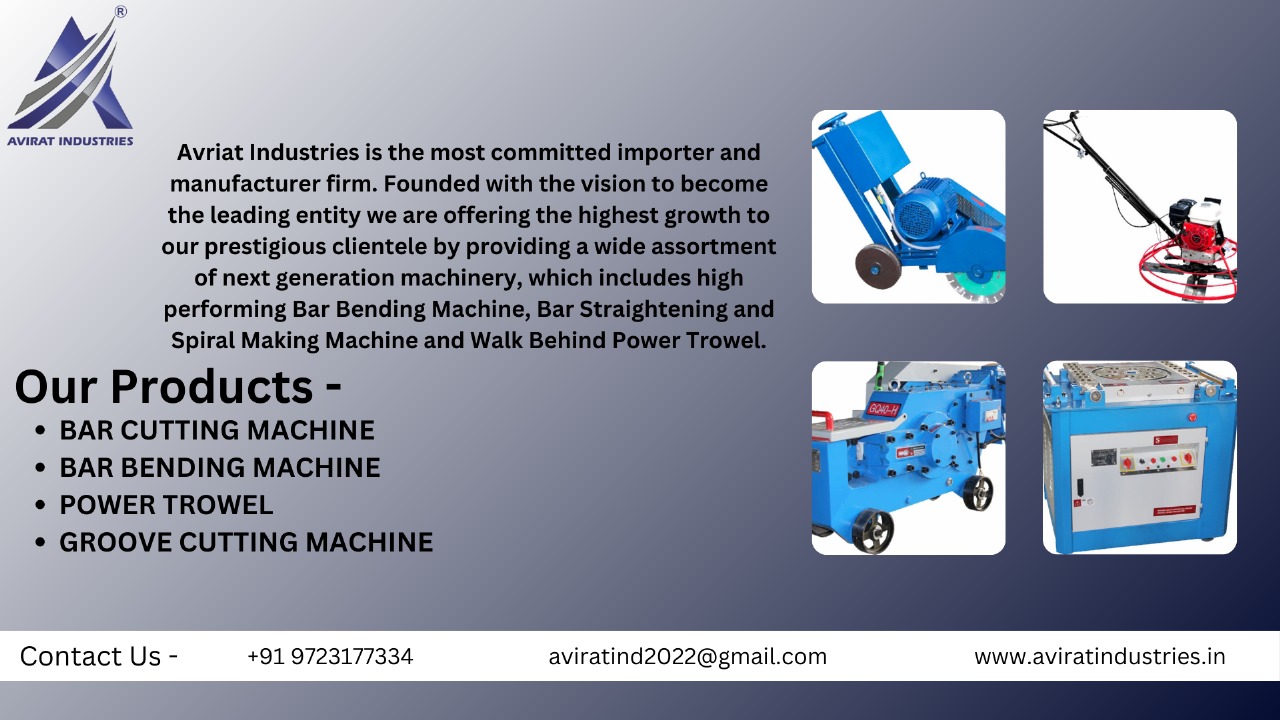
Introduction —Diesel Engine Groove Cutter for Industrial Floors
A diesel engine groove cutter for industrial floors is built for continuous, heavy-duty groove cutting where electrical supply is limited or site conditions demand high torque. This machine is widely used to create expansion joint grooves, anti-slip traction lines, trench alignment marks, and controlled-depth cuts on concrete and RCC flooring. With stable chassis balance, adjustable cutting depth, and vibration-managed operation, it helps deliver clean, uniform grooves across large factory sheds, warehouse slabs, parking decks, and infrastructure flooring. Diesel power provides consistent output on long shifts, while the cutter head assembly supports precise tracking along straight guides for accurate layout work. For industrial contractors, this equipment improves productivity, reduces manual chipping, and ensures repeatable groove geometry for reliable finishing and maintenance jobs.
Working Principle & Process Flow — Diesel Floor Grooving
The machine uses a diesel engine to drive the cutting shaft through a belt/gear transmission. A diamond grooving blade or grooving wheel rotates at controlled speed while the operator guides the unit along a marked line or guide rail. Depth is set using a calibrated adjustment mechanism and the cutting head remains stable against the floor surface to maintain consistent groove depth. As the cutter advances, the rotating blade removes a narrow strip of concrete, forming a uniform groove suitable for jointing, traction, or repair preparation. Many industrial setups pair the cutter with dust extraction or water-assisted cutting (where permitted) to improve visibility and reduce airborne particles. The result is a clean, straight groove with controlled width and depth across hard concrete surfaces.
Common Types of Industrial Floor Groove Cutters
- Diesel Walk-Behind Groove Cutter — Preferred for large sites, remote zones, and long runtime operations.
- Petrol Groove Cutter — Compact option for medium-duty cutting and smaller work areas.
- Electric Groove Cutter — Suitable for indoor facilities with reliable power and lower noise requirements.
- Push-Type Line Groover — Designed for straight traction grooves and channel lines on finished floors.
- Multi-Blade Grooving Unit — Used when multiple parallel grooves are required for anti-slip patterns.
Key Features & Practical Specifications
- Power Source: Diesel engine drive for consistent torque under continuous load.
- Cutting Control: Adjustable depth setting for uniform groove geometry on hard concrete.
- Blade Compatibility: Supports diamond grooving blades for concrete and RCC slabs.
- Stable Chassis: Balanced frame helps maintain straight tracking and reduced chatter.
- Handle Ergonomics: Operator-friendly controls for long shift comfort and precise guidance.
- Maintenance Access: Easy access to belts, filters, and cutting head components for quick service.
Applications of Diesel Groove Cutters for Industrial Floors
- Warehouse and Factory Floors — Cutting controlled grooves for expansion joints and slab movement management.
- Parking Decks and Basements — Creating traction grooves to improve anti-slip performance on ramps and lanes.
- RCC Industrial Slabs — Groove cutting for repair preparation, crack chasing, and joint cleaning pathways.
- Road and Utility Zones — Marking and cutting trench lines for controlled opening and resurfacing prep.
- Cold Storage and Food Units — Grooves for drainage routing and surface preparation before coatings.
Why Choose a Diesel Engine Groove Cutter for Industrial Jobs?
- High Productivity: Diesel power supports long runtime cutting across large floor areas without downtime.
- Consistent Groove Quality: Depth control helps maintain uniform grooves that match engineering requirements.
- Site Flexibility: Suitable for outdoor and indoor projects where electrical power is limited or unstable.
- Cleaner Work Output: Diamond cutting produces straight, defined grooves with reduced edge breakage.
- Contractor Efficiency: Faster groove creation reduces manual labor and improves project timelines.
Reliable Industrial Floor Grooving Solution for Contractors
For industrial flooring contractors, a diesel groove cutter is a dependable choice for expansion joint cutting, traction groove patterns, and maintenance preparation on concrete surfaces. The right setup supports controlled depth, stable tracking, and service-friendly maintenance, helping teams deliver consistent grooves across warehouses, manufacturing units, and infrastructure sites. For best results, match the blade type to the floor grade, confirm groove layout using guides, and follow safe cutting practices with dust control and routine checks.
Operation & Maintenance Tips — Diesel Floor Groove Cutter
- Inspect blade condition and mounting before every shift to prevent uneven cutting and vibration.
- Set groove depth gradually with test cuts, then lock the depth adjustment for consistent output.
- Maintain engine oil, filters, and belts on schedule for stable power and longer engine life.
- Use proper line guides and steady travel speed to keep grooves straight and uniform across slabs.
- Adopt dust control practices suitable for the site to improve safety and cutting visibility.
FAQs – Diesel Engine Groove Cutter for Industrial Floors
Contact Details
Talk to our specialists today for tailored solutions and fast assistance.